At Levertons, every member of our team plays an important role in supporting families during one of the most difficult times in their lives. Behind the scenes, our embalmers carry a unique responsibility: caring for the deceased with dignity and respect, and helping families spend precious final moments with their loved ones.
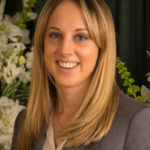
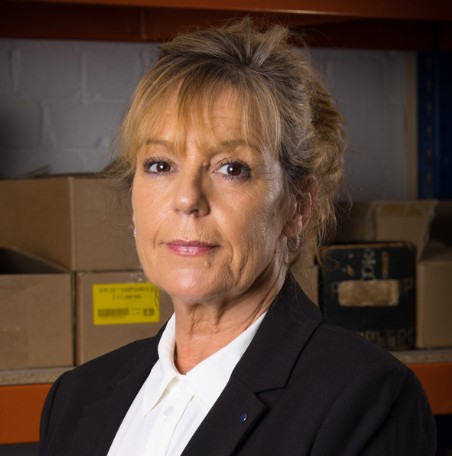
In this interview, we speak with Lesley Rogers MBIE Dip, who shares her journey into embalming, the challenges and rewards of the role, and why she feels honoured to do the work she does.
Can you tell us about how you became an embalmer?
I actually began training to become a qualified embalmer at the ripe old age of 52. The training itself was quite intense and took place over three years, and I finally qualified in December 2017.
Initially, I worked as a Trade Embalmer. This meant travelling between various funeral homes across a radius of around 200 miles, working wherever I needed. To be honest, that lifestyle didn’t really suit me.
In November 2018, I was called into Levertons to perform two urgent embalms. It took me the best part of six hours, but from that point on, I have worked solely with Levertons- and I absolutely love it. Even after eight years, I must admit I haven’t got any quicker!
What first sparked your interest in embalming?
My interest in embalming actually began when I was a teenager. However, after leaving school, I went to college to study a secretarial course. In the early 1980s, that was very much the expected path for girls, and my career ended up going in a completely different direction.
Thirty-seven years later, an opportunity came along that allowed me to change direction. I decided it was the right moment to follow something I had always been interested in, so I enrolled on an embalming course in Colchester.
Looking back, it was a big change, but one I’m very glad I made.
What does your role mean to you personally?
I find it a real privilege to be in a position where I can help a family bring back their loved one for a final few days to continue their long process of grieving.
There are many different causes of death, and every situation is unique. Emotions and grief can take many forms, and being the last person who physically cares for someone before they are returned to their family is something I take very seriously.
Whether I am embalming or tidying up, I always do my absolute best and treat every person with the same level of respect and dignity.
What goes through your mind when preparing someone?
It’s quite a strange feeling preparing someone who has passed away. You often find yourself wondering about their life- what they experienced, who they loved, and the story they lived.
From the moment I begin preparing someone to the moment I place them in their coffin, all I really have is an empty story. I don’t know who they were or what their life contained, but I hope that, in some small way, I can be part of helping their family say goodbye properly.
What are some of the most challenging aspects of the job?
One of the most challenging parts of my job is seeing the deceased for the very first time.
People often have an image in their minds based on television programmes or films, but the reality can be very different- and not always in a good way. Every case is unique, and I have to immediately assess the situation and decide on the best course of treatment to restore the person’s appearance as much as possible.
It requires focus, experience, and careful judgement.
How do you cope with the emotional side of your work?
Mentally, I’ve learned to compartmentalise my work. When I leave at the end of the day, I’m usually able to close the door on it and not carry the emotions of the day with me.
I feel very confident when it comes to working with the deceased themselves. The part I sometimes find more difficult is interacting with families- although this happens very rarely. Seeing someone’s raw grief in the presence of the loved one I have prepared can stay with me for a while, and occasionally it’s harder to leave that feeling behind at the end of the day.
Are there moments in your career that have stayed with you?
There have been many memorable moments during my time at Levertons. Three in particular come to mind regularly, and one of them is something I still can’t quite get my head around.
Experiences like these remind you how unique every situation is, and how important it is to approach every person and every family with care and understanding.
What gives you the most satisfaction in your role?
Whenever I receive feedback that my work has made a difference to a family, it means a great deal to me. Knowing that I may have helped make their grieving process just a little easier is incredibly rewarding.
I feel truly honoured to be able to do what I do.
Is there anyting about embalming that people might not realise?
One thing people might not realise is that embalming can be a very lonely role. There is a great deal of responsibility involved, and much of the work is done independently.
It’s not a profession that people tend to fall into casually. To work in embalming, you need to feel a genuine calling towards it. Compassion and a completely non-judgemental attitude are absolutely essential.
Lesley Rogers MBIE Dip S/4944
Lesley’s dedication and compassion reflect the values we hold at Levertons: treating every person with dignity, respect, and care, while supporting families through one of life’s most difficult moments.